Methodology
Key Takeaways
- Voters are very pessimistic about the economy. 75% giving the economy a negative rating, with a plurality (46%) giving it a “poor” rating.
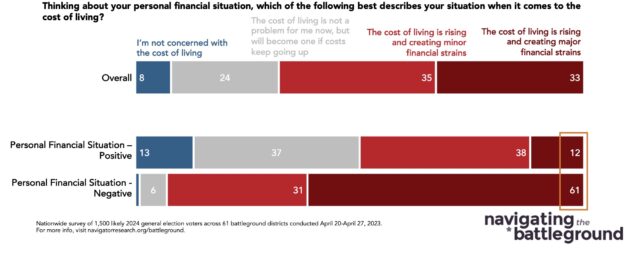
- High cost-of-living is top of mind for voters and is their leading economic indicator. High cost-of- living is what they look at to determine the health of the economy, with nearly 70% of voters saying it is causing financial strain, and 54% saying it is having a major impact on their finances.
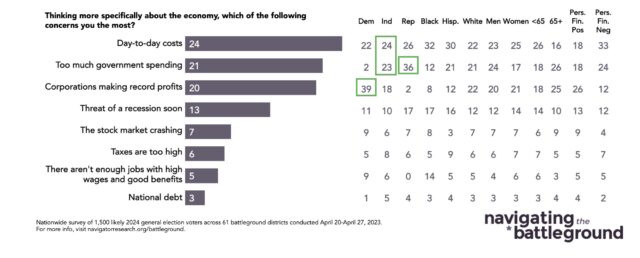
- But their concerns about the economy are more diverse. Day-to-day costs (24%), government spending (21%), and record profits for corporations (20%) are the top economic concerns for voters.
- Voters are not optimistic that things will improve in the near future. A plurality (45%) say they think their financial situation will be about the same a year from now (which is to say, still strained), with 29% saying it will be worse and only 14% saying it will be better.
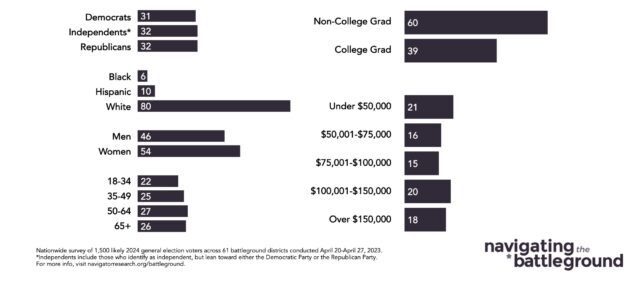
Demographic Profile of Battleground Voters
Voters are Very Pessimistic About the State of the U.S. Economy; Nearly Half Describe it as “Poor”
Even voters with a positive personal financial outlook are critical of the overall economy.

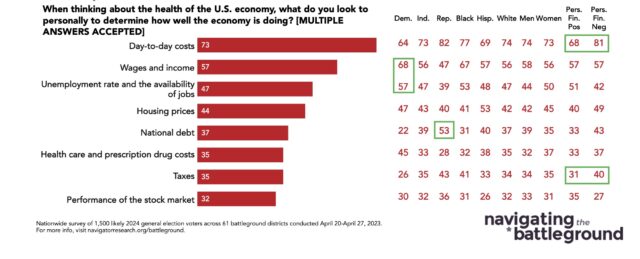
Three-Quarters of Voters Measure the Health of the Economy by Day-to-Day Costs
Voters who are more pessimistic about their own financial situation are more likely to look at day-to-day costs to determine the health of the economy; the stock market ranks lowest of all indicators tested.
The Cost-of-Living Crisis is Creating Financial Strain for Nearly Seven in Ten in the Battleground
Voters who rate their personal financial situation negatively are five times more likely than voters who positively rate their financial situation to say the cost-of-living crisis is causing a major financial strain.
Voters are Pessimistic About the Economic Outlook Over the Next Year, Particularly Republicans
Across race, gender, and age, larger shares say things will be the same for them personally.

Voters Who View Their Personal Finances Negatively Are More Likely to Have a Negative Outlook For the Future
Voters in blue collar and service industry jobs have a slightly more negative outlook than those in white collar jobs.

Day-to-Day Costs Top the List of Economic Issues Having a Major Impact on Voters’ Personal Finances
Republicans believe the national debt has a major impact on their finances, but it is much lower impact for Democrats and independents.
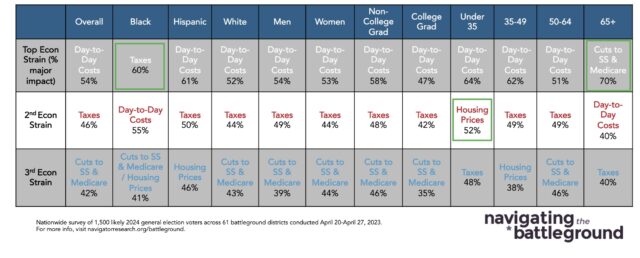
Day-to-Day Costs Are the Top Economic Strain for Most Voters
Cuts to Social Security and Medicare would have an especially large impact on seniors, while housing prices cause more strain for younger voters.
- For Black voters, the top economic strain is taxes.
Voters’ Biggest Concerns Generally Are Day-to-Day Costs, Government Spending, and Corporate Profits
Republicans’ top concern is too much government spending, while Democrats’ top concern is corporations making record profits.
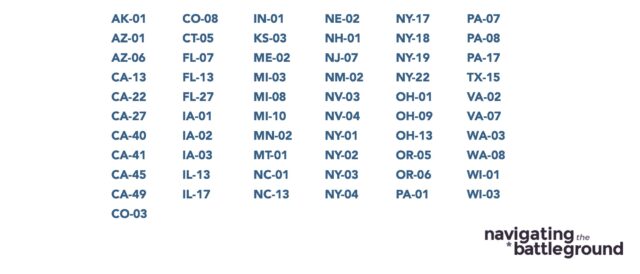
Appendix: Congressional Districts Included In Sample